
News

News
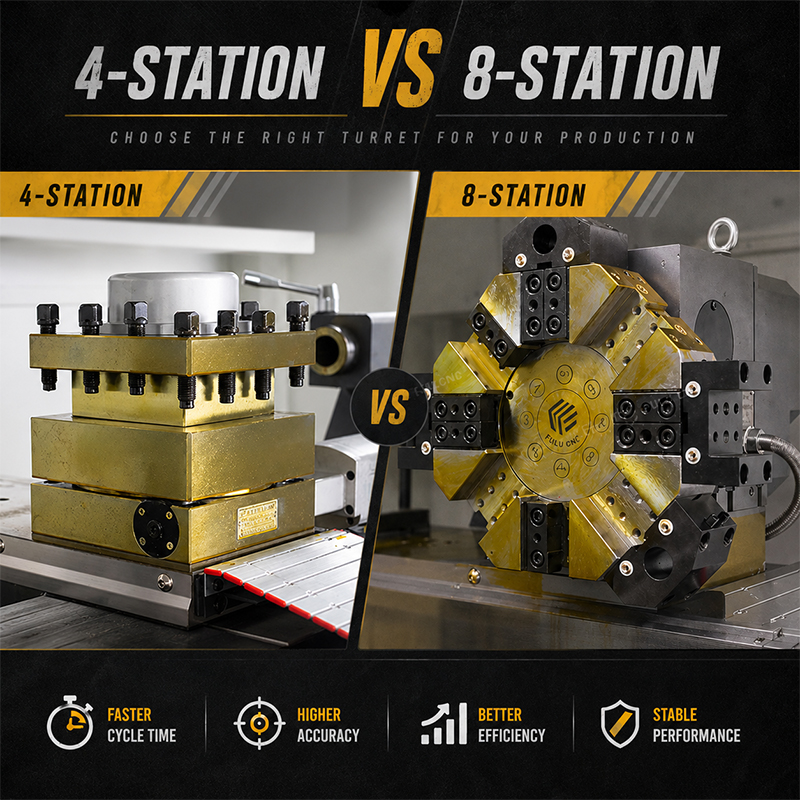
When purchasing CNC lathes, besides paying attention to factors such as the machine bed structure, spindle configuration, and control system, the choice of tool turret is equally important. The tool turret not only determines how many tools the machine can hold but also directly affects machining efficiency, automation level, and production costs.
Currently, CNC lathes on the market are mainly equipped with either four-station or eight-station tool turrets. For many customers, it is often unclear how to choose between these two types of turrets.
So, what exactly are the differences between four-station and eight-station tool turrets? What machining scenarios are they each suitable for? This article will provide a detailed analysis from the perspectives of structure, machining capability, production efficiency, applicable industries, and procurement costs to help you select the tool turret configuration that best fits your production needs.
The tool turret is a crucial component of the CNC lathe's automatic tool changing system; it is responsible for holding the tools and automatically switching them according to the program.
A four-station tool turret typically holds four different types of tools, such as an external turning tool, grooving tool, cutoff tool, and threading tool. During machining, the machine automatically indexes the turret according to the program to switch between different operations. Due to its simple structure and lower cost, the four-station turret is the standard configuration for economical CNC lathes and is widely used in general mechanical machining industries.
The eight-station tool turret is an upgraded configuration based on the four-station turret, capable of holding eight tools simultaneously to meet the needs of more machining operations. With the development of automotive parts, hydraulic components, and precision machinery industries, the eight-station turret has become the preferred configuration for an increasing number of automated production lines.


Although both turrets serve the basic function of automatic tool changing, there are significant differences in their internal structures.
The four-station turret uses a relatively simple positioning and locking mechanism, has a smaller overall size, and fewer components, resulting in lower manufacturing costs and easier maintenance. For parts with fewer machining steps, this structure can already meet daily production requirements.
In contrast, the eight-station turret accommodates more tool positions and employs a more complex positioning mechanism and locking system internally. Modern hydraulic and servo turrets are also equipped with high-precision positioning mechanisms to ensure stable and repeatable positioning accuracy with every tool change.
Although the structure of the eight-station turret is more complex, mature manufacturing processes have ensured its long-term operational stability, which is why it is increasingly used in modern CNC lathes.

Processing efficiency is one of the most important concerns for enterprises and is also the biggest difference between four-station and eight-station turrets.
For products with fewer machining processes, a four-station turret can already meet the processing requirements. For example, ordinary shaft parts, flanges, sleeves, and similar products can complete the entire machining process with just a few tools, making the four-station turret more economical.
However, when the workpiece requires multiple processes such as external turning, internal hole machining, grooving, threading, drilling, and chamfering, the four-station turret often requires manual tool changes, which not only increases auxiliary time but also easily affects the machining cycle.
The eight-station turret can have more tools installed in advance, allowing the entire machining process to proceed without manual intervention. The machine tool automatically changes tools according to the program, greatly improving continuous machining capability. For batch orders, saving a few seconds per piece on tool changes can significantly enhance overall productivity over time.
Many customers believe that the eight-station turret is necessarily more accurate than the four-station turret, but this view is not entirely correct.
The number of turret stations is not the only factor determining machining accuracy. What truly affects accuracy are the rigidity of the machine tool itself, spindle accuracy, guideway precision, and the repeat positioning accuracy of the turret.
High-quality four-station turrets can also achieve high repeat positioning accuracy and fully meet the machining requirements of ordinary mechanical parts. High-end eight-station hydraulic turrets, due to their more precise positioning mechanisms, offer better stability during long continuous machining processes and are therefore more suitable for automated mass production.
For the vast majority of enterprises, both types of turrets can meet product accuracy requirements. The real consideration should be production efficiency and machining processes.
If a company mainly processes ordinary mechanical parts with simple product processes and small order quantities, a four-station tool turret can already meet production needs. It has a lower procurement cost, simple maintenance, and high cost-effectiveness, making it a very popular configuration for small and medium-sized machining enterprises.
As the manufacturing industry continues to develop towards automation, more and more companies are beginning to process complex parts and wish to reduce manual intervention. In this case, an eight-station tool turret can install more tools in advance to achieve continuous machining, greatly improving equipment utilization.
For automotive parts, hydraulic industry, aerospace parts, and automated production lines, the eight-station tool turret has become a more mainstream choice.

Many users worry that the eight-station tool turret has a complex structure and high maintenance costs. In fact, as long as regular lubrication, inspection of locking mechanisms, and positioning accuracy are performed according to equipment maintenance requirements, both types of turrets can operate stably over the long term.
The four-station tool turret, due to its simple structure, is easier to repair and its component costs are relatively low.
Although the eight-station tool turret has a slightly higher purchase price, it can reduce manual tool change time and improve production efficiency. From a long-term usage perspective, its overall cost is not necessarily higher than that of the four-station tool turret.
For companies engaged in long-term mass production, improving equipment utilization is often more important than saving initial procurement costs.
There is no absolute superiority between four-station and eight-station tool turrets; the key lies in the company's machining needs and development plans. If you focus more on equipment investment costs, the four-station tool turret can provide stable and reliable machining capabilities; if you pursue higher production efficiency, automation level, and complex part processing capabilities, the eight-station tool turret is a more worthwhile long-term investment.
As a professional CNC lathe manufacturer, FULUCNC can provide various configurations according to different customer machining needs, including four-station electric tool turrets, four-station hydraulic tool turrets, eight-station electric tool turrets, eight-station hydraulic tool turrets, and eight-station servo tool turrets.
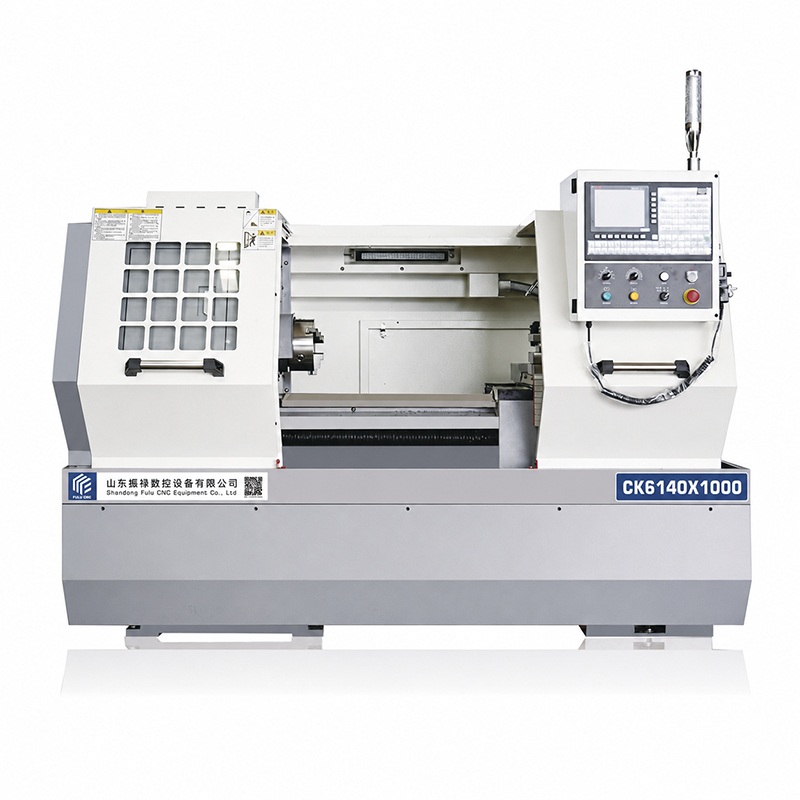
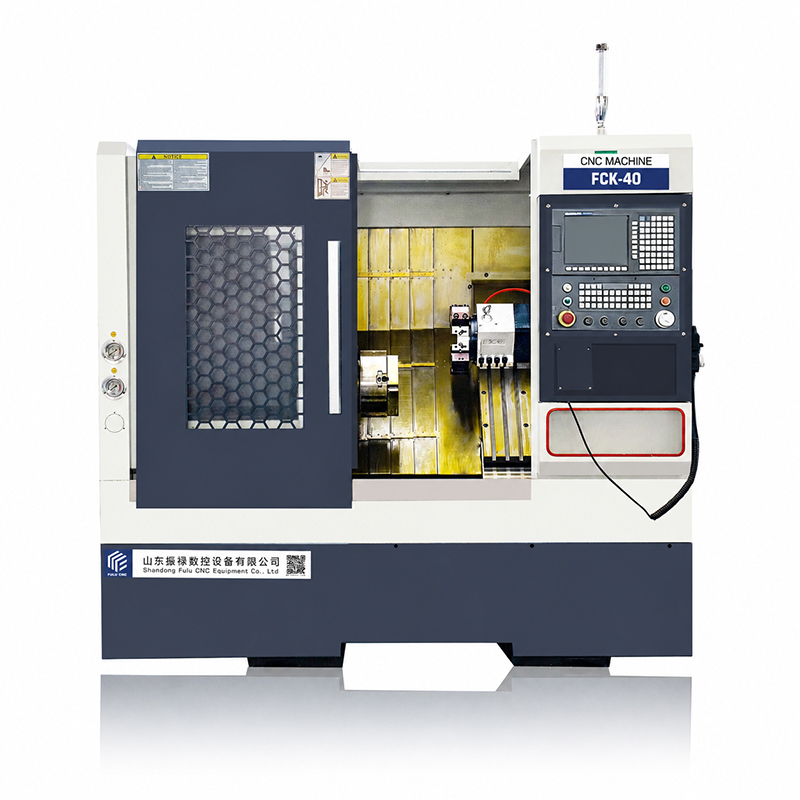
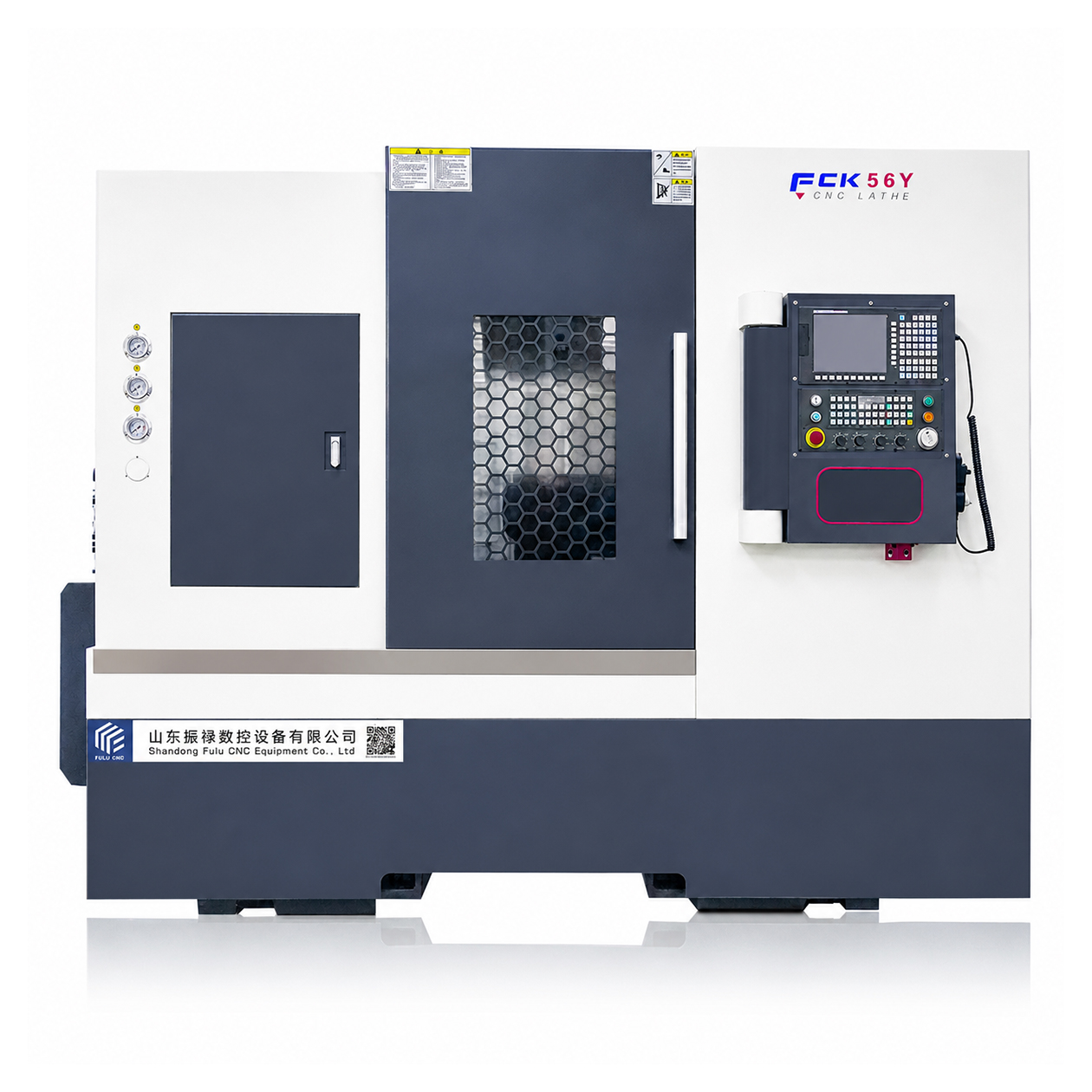
Our CK6150, CK6163,CK6180CK6186, CK61100, FCK50,FCK56and other series of CNC lathes all support flexible optional configurations, and can provide professional selection advice based on processing technology, product structure, and budget to help customers achieve higher machining efficiency and return on investment.
If you are looking for a CNC lathe suitable for your production needs, feel free to contactFULUCNC. Our engineers will recommend more reasonable turret configurations and complete machine solutions based on your product type, processing technology, and budget to help make your production more efficient and stable.


Plsease input value
Plsease input value
Plsease input value
Plsease input value
Plsease input value
